Generative AI is everywhere. It dominates conferences, fills LinkedIn feeds, and changes how companies think about organic search. Brands are racing to optimise for AI Overviews, building vector embeddings, and restructuring their content models around LLMs.
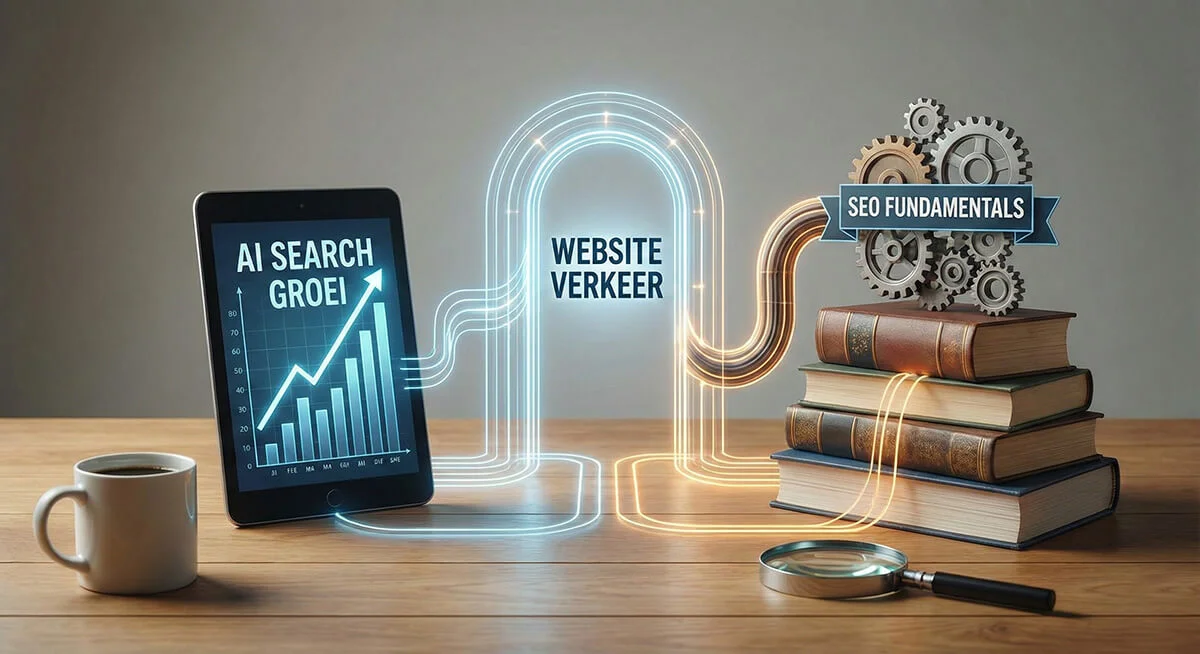
What gets far less attention is a simple reality: for most websites, AI platforms still deliver a small share of total traffic. AI search is growing, no doubt about it. But in most cases all LLM platforms together account for roughly 2% to 3% of the organic traffic Google delivers on its own.
Despite that gap, many teams spend more time chasing AI strategies than fixing simple, high-impact SEO fundamentals that still produce measurable results. Instead of improving what matters most today, they over-invest in the future while underperforming in the present.
Quick SEO wins still deliver outsized results
In an era where everyone is obsessed with vector embeddings and semantic relationships, we forget that small updates can have an enormous impact.
Title tags are still one of the simplest and most effective SEO levers you can pull. And they are often one of the on-page elements most websites get wrong. Whether that means targeting the wrong keywords, not including variations, or targeting nothing at all.
A few weeks ago a client saw a win by simply adding "& [keyword]" to the existing title tag on their homepage. Nothing else changed. Keyword rankings shot up, and so did clicks and impressions for queries containing that keyword.
All of this came from changing the title tag on a single page. Combine that with other tactics such as on-page copy edits, internal linking, and backlinking across multiple pages, and the growth continues.
It looks basic. It still works. If you only focus on advanced GEO strategies, you miss simple tactics that deliver direct, observable impact.
Content freshness and authority still matter for competitive keywords
Another tactic that has slipped out of view with the rise of AI is what is often called the skyscraper technique. It means identifying a set of keywords and the pages that already rank for them, then publishing a materially stronger version designed to beat the existing results.
It is true that the web is saturated with content on similar subjects, especially for keywords visible in most research tools. But when a site has sufficient authority, a clear right to win, and content freshness, this approach can still be highly effective.
We have seen this work repeatedly. With a recent article we published for a client on a popular, long-running subject with many competing pages already ranking, the post climbed to number 2 almost immediately and started generating net-new clicks and impressions.
Why did it work? The site has strong authority, and much of the content ranking for it was outdated and stale. If you hesitate to publish the thousandth article on an established subject, that hesitation is understandable. This approach does not work for every site. But ignoring it completely can mean missing clear, high-confidence wins like this one.
User experience remains a critical conversion lever
Hype around AI-driven shopping experiences has led some teams to believe that traditional website optimisation is becoming obsolete. There is a growing assumption that AI assistants will soon handle most interactions, or that users will convert directly within AI platforms without ever reaching a website.
Part of that future is starting to take shape, especially for ecommerce brands experimenting with features such as Instant Checkout in ChatGPT. But many websites do not sell products. And even for those that do, the majority still receive significant traffic from traditional search and keep relying on calls to action and on-page signals to drive conversions.
It also matters little how a user arrives, whether through organic search, paid search, AI referrals, or direct visits. A fast site, a strong user experience, and a clear conversion funnel remain essential.
There are also clear performance gains tied to optimising these elements. In a recent CTR test for a client we saw significant improvements in conversion rates. Brands that keep investing in user experience and conversion optimisation will outperform those that do not. That gap is likely to widen the longer teams wait for AI to replace the conversion funnel entirely.
AI is reshaping search, but what works still matters
There is no dispute that AI is reshaping the search landscape. It is changing user behaviour, influencing SERPs, and complicating attribution models. The bigger risk for many businesses, however, is not underestimating AI but overcorrecting for it.
Traditional organic search remains the primary traffic source for most websites, and SEO fundamentals still deliver when they are executed well.
- Quick wins are real. A simple title tag adjustment can dramatically improve rankings.
- Higher quality content is still rewarded. The skyscraper technique works when you have authority and freshness.
- User experience optimisation shows no sign of becoming irrelevant. Conversion optimisation keeps delivering measurable results.
These are examples of tactics that are still effective today. Importantly, these efforts do not operate in isolation. Improving the fundamentals of a website can strengthen organic visibility while also supporting paid search performance and LLM visibility.
Staying on top of AI developments and planning for what is coming is essential. That should not come at the expense of the strategies currently driving measurable growth.
AI search is growing, but SEO fundamentals remain the backbone of organic growth. The companies that master both, rather than one at the expense of the other, are the ones that win.